

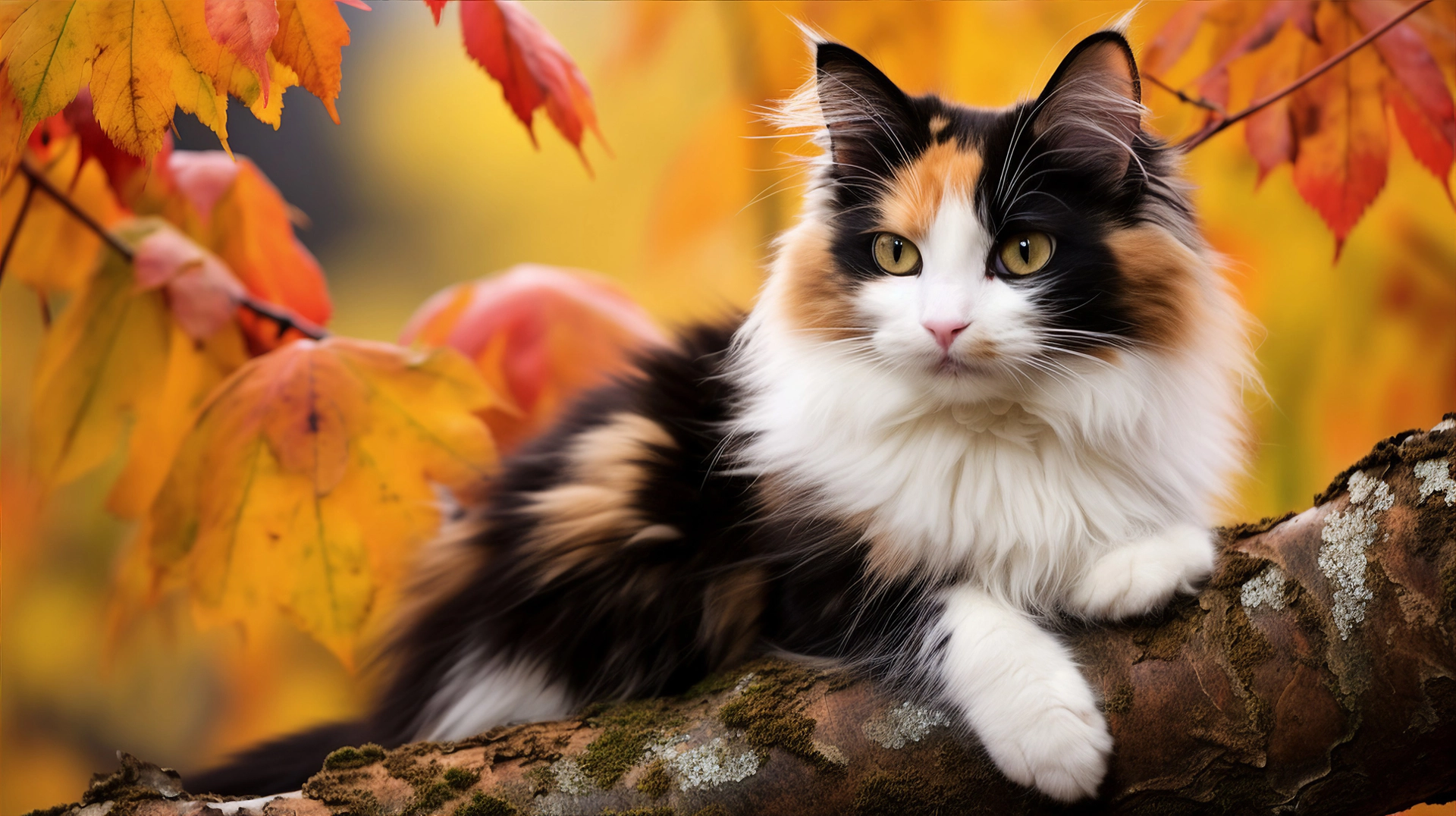
Did you know that Calico Cat is a color pattern, not a breed? If you have ever seen one, you know its coat is truly unique. They are instantly recognizable by their striking tri-color coat. This coat has orange, black, and white fur arranged in a distinct patchwork pattern. Many owners wonder about their sassy reputation and remarkable genetics.
This guide will uncover the science and the folklore behind these unique cats. We will explain what makes the Calico Cats special and how to provide the best care.
Quick Facts About the Calico Cats
- Pattern, Not Breed: They refer to a color pattern, not a specific breed.
- Female Dominance: Almost all Calicos are of the female gender. The percentage is over 99.9%.
- Tri-Color Definition: The coat must display three true colors in large, distinct white patches.
- Rarity: Male calicoes are extremely rare. Approximately 1 in 3,000 are born male.
- Cultural Status: Calicos are often associated with good luck and prosperity. This is especially true in Japanese folklore, known as the Maneki Neko.
What Defines a Calico Cat?
A Calico Cat is simply a domestic feline of any cat breed. It displays a tri-color coat dominated by white fur.
The necessary coat colors are white, black, and orange. Sometimes the orange appears as red. These colors must appear in large, clearly defined patches across the cat’s body. This patch size is crucial for their definition.
The term “called calico” comes from a historical type of printed cloth. Like that fabric, no two Calicos share the exact same arrangement of multicolored markings. The presence of the color pattern earns the moniker, whether the cat is mixed-breed or purebred.
The Calico Cats patterns are found across many well-known cat breed lines. These include the Japanese Bobtail and the American Shorthair. The underlying breed determines the cat’s size, fur coloration, and physical needs.
Interested in reading the article: “Long Hair Calico Cat: A Brief Overview“
Color Variations and Subtypes
The classic Calico pattern is bold and vivid. However, several recognized and beautiful variations exist in fur coloration.
Standard Calico
This is the pattern most people recognize. It features large, distinct white patches. These patches cover 25% to 75% of the body. The remaining patchwork pattern consists of bold ginger patches and black patches. The colored patches are sharp and clearly separated by the white fur areas.
Dilute Calico
The dilute calico is a softer version of the standard pattern. The dense colors are genetically modified to appear faded or muted.
- Black becomes soft grey or blue.
- Orange becomes cream or gold.
The coat still has three distinct colors. This is called mosaic coloration. The final look is pastel and blended, not stark.
Caliby (Tabby-Calico)
The “Caliby” is a tri-color coat. Tabby stripes are visible within the colored patches.
- The cat has the overall Calico Cat pattern with white.
- The black areas display dark tabby stripes.
- The orange patches (or cream) display lighter tabby stripes.
This variation combines both the tabby and calico coat patterns. This further highlights the complex nature of feline fur coloration.
The Genetics Behind the Unique Pattern
The Calico Cat owes its striking appearance to science. The fur coloration gene is carried on the X chromosome. This is why the answer to “Are all calico cats female?” is almost always yes.
Why Most Calicos Are Female (XX)
The gene for coat colors resides only on the X chromosome. This includes orange versus non-orange.
- Females have two X chromosomes (XX). They can carry the gene for both orange and black simultaneously.
- X-Chromosome Inactivation: Early in the embryo, one X chromosome randomly shuts off in each cell.
- The cells where the X chromosome carrying the orange gene is active will develop orange patches.
- The cells where the X chromosome carrying the black gene is active will develop black patches.
- This random cellular process results in the unique mosaic coloration of the Calico.
- White Patches: Large areas of white fur are controlled by a separate gene. This gene acts independently, suppressing color in those areas.
The Rarity of Male Calico Cats
The existence of these male cats is a truly rare occurrence. Males only have one X and one Y chromosome (XY). They should only ever be one color.
- XXY Syndrome: Most male calicoes occur due to a genetic anomaly. It is called Klinefelter syndrome. These cats possess an extra X chromosome (XXY). This provides the necessary two X chromosomes for the pattern.
- Sterility: Almost all XXY males are sterile and cannot reproduce.
- Chimerism: Another even rarer cause is chimerism. Here, two embryos started life separately but then fused. This results in one cat with two distinct genetic populations. This is highly uncommon.
Calico vs. Tortoiseshell
Differentiating the Calico Cats from their cousin, the tortoiseshell cat, is confusing. If you are looking for resources on coat colors, you might enjoy our guide on the Brown Cats.
| Feature | Calico Cats | Tortoiseshell Cat (Tortie) |
| Colors | Tri-Color: Orange, Black, and White (or dilute variants). | Bi-Color: Orange/Red and Black/Brown (or dilute variants). |
| White Fur | Always features substantial white fur. It covers 25% or more of the body. | Features little to no white fur. White is usually confined to the paws or a small spot. |
| Pattern | Colors appear in large, distinct patches. They are separated by white. | Colors are mottled, woven, or brindled together. There is little separation between the black and orange. |
To identify your cat, look for the white patches. If significant white fur forms distinct boundaries between the orange and black, your cat is called a calico.
Personality and Temperament
Are calico cats mean or sassy? The Calicoes are often surrounded by myths about their personality. Many owners report that Calicos are “sassy,” “spunky,” “bold,” and “loyal.” This trait is sometimes jokingly called “cali-tude.”
However, scientifically, fur coloration does not determine personality.
- The Science: The Calico pattern appears across every cat breed. Temperament depends on genetics, socialization, and environment. It is not dependent on the color pattern itself. This is true for the active Bengal cats and the docile Persian.
- The Myth Origin: The “sassy” reputation may stem from the pattern’s link to the female gender. Many female cats, regardless of color, tend to be slightly more vocal. They can also be more particular than their male counterparts.
Judge the Calicoes by their behavior and their underlying breed. Do not judge it by its beautiful patchwork pattern.
Health, Lifespan, and Rare Males
The Calico pattern carries no extra health risks for the vast majority of female cats. The Calico cat’s average lifespan is the same as that of any other domestic feline.
Lifespan and General Health
- Calico Life Expectancy: How long do calico cats live? They typically live 12 to 17 years. Many reach over 20 years, similar to the general domestic feline.
- Care Focus: Longevity is determined by preventive veterinary care. A balanced diet matters. Owners should be mindful of cat food brands. Longevity is also increased by living primarily indoors.
Health Risks for Rare Male Calicos
The rare male occurrence of the XXY Calico Cat carries specific health implications. Male calico cats with Klinefelter syndrome are generally prone to these issues:
- Sterility: They cannot reproduce.
- Developmental Issues: They may experience lower bone density. Developmental delays are also possible. They may also be prone to increased body fat.
- Shortened Lifespan: The genetic anomaly can sometimes lead to a slightly reduced calico lifespan. This is not universally true.
Veterinary genetic counseling is strongly recommended if you own a male calico cat.
Care, Grooming, and What to Expect
The care routine for a Calico Cat is determined by its coat patterns. These coat patterns vary widely.
- Coat Length: The cat could be a calico cat with short hair. This requires minimal grooming. It could also be a fluffy calico cat. This requires daily brushing.
- Shedding: Do calico cats shed a lot? Shedding depends on the underlying breed. Consistent, routine brushing is key regardless of coat length.
- Basic Care: Treat the Calico Cat as you would any cat. Provide regular vet check-ups, high-quality nutrition, and dental care. There are no exotic care needs tied to their color.
Adoption and Rescue Tips
The Calico Cat is a color pattern, not a cat breed. You can find them in shelters, rescues, and from breeders.
- Searching: Use specific search terms like “Calico Cat adoption” combined with your city name. Ask shelters to alert you if a cat tri color enters their facility.
- Adoption Availability: The tri-color pattern is common in mixed-breed cats. You are highly likely to find Calicos in rescues.
- Verification: If adopting a rare male Calico, ensure the shelter provides vet records. These records should detail any known health issues related to the XXY condition.
Learn more about cats at Love Your Pets Daily. We frequently post updates and guides on the Cats and Dogs you loved the most in your life.
Conclusion
The Calicoes are not genetically magical. However, its stunning mosaic coloration makes it one of a kind. Every patchwork pattern is a unique biological accident. This ensures that no two Calicos look alike. Whether you seek a dark calico kitten or a soft dilute calico, you are bringing home a vibrant companion.
Remember to prioritize health and care based on the cat’s breed and individual needs. Appreciate the science behind their beautiful coats. Give them the excellent care they deserve.
FAQs
Do calico cats have special needs?
No, the Calico Cat pattern itself does not impose special needs. Their care requirements are based on their underlying cat breed and coat length. For instance, a fluffy calico cat requires more frequent grooming than a short-haired calico. They do require the same preventive care as any domestic feline. This includes vaccinations and dental health management.
Why are calico cats so rare?
The rare male occurrence of the Calico Cat is due to genetics. The fur coloration requires two X chromosomes to display the tri-color coat. Male calico cats (XXY) make up only about 1 in 3,000 births. Female cats (XX) are common. This genetic requirement ensures the male is a rare anomaly. He often suffers from Klinefelter syndrome and sterility.
What is the 3-3-3 rule of cats?
The “3-3-3 rule” is a widely used guideline in shelter and rescue environments. It helps understand an adopted cat’s adjustment period. Organizations rehome the gentle Tuxedo cat and other breeds using this rule. It suggests a cat needs three days to decompress and hide. It takes three weeks to learn the basic routine. Finally, it needs three months to feel comfortable and show its true personality. Understanding this rule helps owners manage the transition for newly adopted Calicoes.
Are calico cats clingy?
Personality traits are not determined by coat patterns. They are determined by genetics, environment, and socialization. The Calico’s strong link to the female gender may contribute to the “sassy” temperament. They can be as cuddly as the quiet Fisher cat or as aloof as the Torbie cat. Expect their personality to develop based on the amount of love and attention you give them.