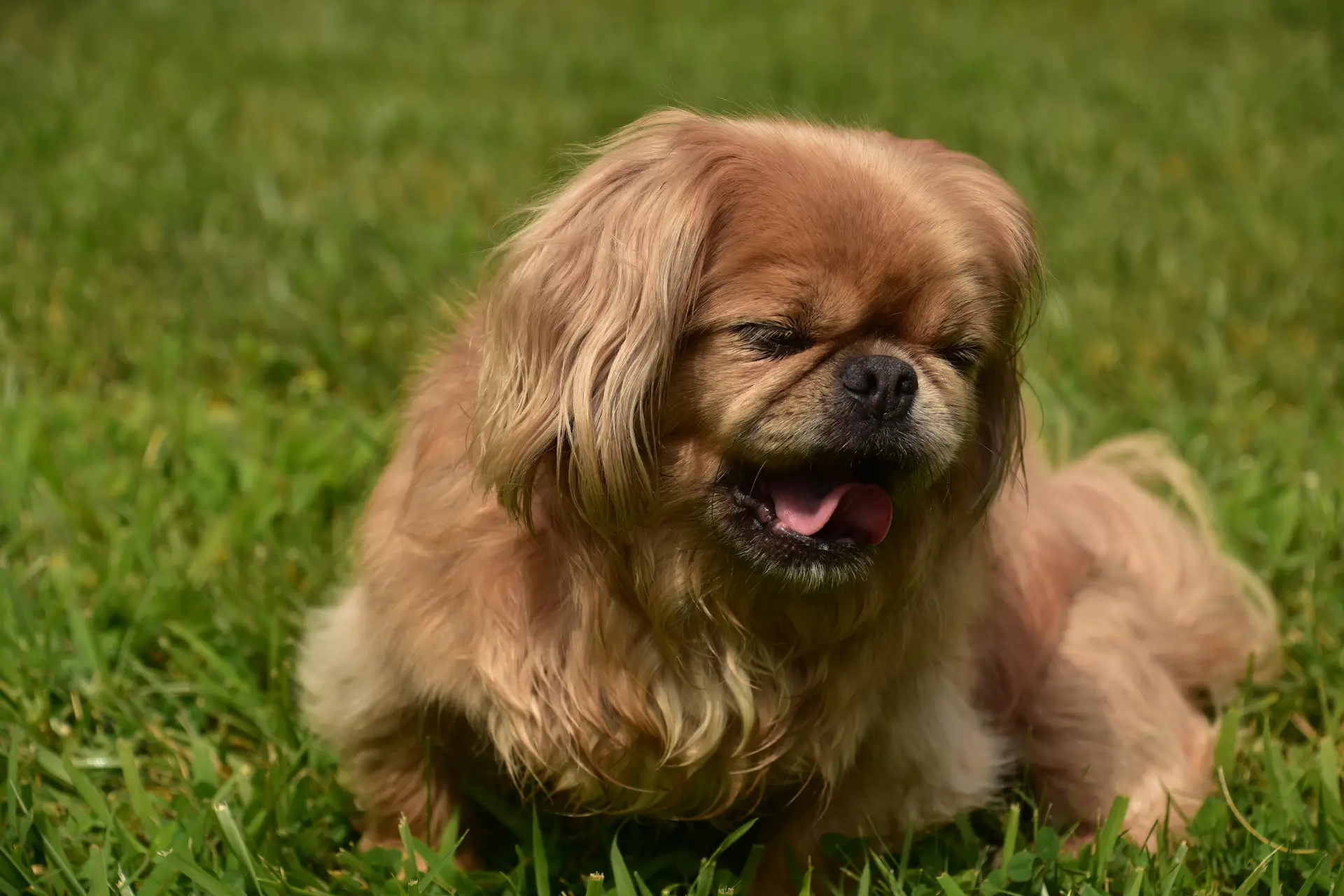
If you have ever seen Pekingese dogs with their distinctive rolling gait and lion-like mane, you’ve witnessed a piece of history. These striking animals were once the sacred companions of Chinese emperors. Today, they are becoming an increasingly uncommon sight. Their shift from palace favorites to a rare breed tells a powerful story. It involves royal exclusivity, complex biology, and changing modern lifestyles.
This guide explores exactly why Pekingese dogs are so rare today. We will delve into their unique origins in ancient China. We trace their lineage directly to the Forbidden City. We will then examine the biological challenges and health issues that make ethical breeding difficult. Finally, we cover the reality of living with this highly independent, double-coated toy breed. If you seek a full-grown white Pekingese or are just curious, understanding their rarity helps us appreciate them more. We believe all breeds deserve to be fully understood. Read more about other breeds on Love Your Pets Daily.
A History of Pekingese Dogs
The rarity of Pekingese dogs is not accidental. Their scarcity was originally a matter of royal design. For nearly a thousand years, these animals were the exclusive property of the Chinese Imperial family. This status was enforced by the highest decree.
The Sacred Lion Dog of Ancient China
In ancient China, the Pekingese held a sacred status. They were bred to resemble the guardian lions that protected palaces. They were considered divine. They were thought to possess a lion’s courage in a small body. Commoners were strictly forbidden from owning them. This extreme form of protection meant the dogs were confined to the Inner Palace. Stealing a Pekingese dog was a crime punishable by death. This historical exclusivity kept the breeding population small for centuries. This lack of diversity created a severe genetic bottleneck.
The Genetic Bottleneck
The breed remained entirely unknown to the Western world until 1860. This happened during the Second Opium War. British and French troops entered the Summer Palace in Beijing. Five surviving Pekingese dogs were found guarding the Emperor’s aunt. These five survivors were subsequently brought to England. One was famously gifted to Queen Victoria.
The five dogs that made it to Europe became the foundation stock. Almost every modern Western Pekingese dog descends from those few original animals. This severe restriction on the gene pool is called the founder effect. This early genetic limitation means certain health issues and physical traits were amplified. This continues to challenge breeders today.
Why Pekingese Dogs Are Hard to Breed
Beyond history, biology plays a massive role in why you don’t see Pekingese dogs everywhere. They are a brachycephalic breed. This means they possess a flat face, which complicates reproduction.
Low Birth Rates and High C-Sections
Pekingese dogs have very small litter sizes. They typically average just 2 to 4 puppies. A medium-sized breed might produce 8 to 10 puppies. This low reproductive output means the population grows slowly. It cannot rebound easily from declines.
Their unique anatomy creates difficulties during birth. Due to their puppies’ large, round heads (a key toy breed characteristic), natural birth is risky. Pekingese dogs have one of the highest Cesarean section rates of any breed. This rate often exceeds 25–30% of all births. Responsible breeding requires significant veterinary intervention. This makes litter expensive and risky. This naturally discourages casual breeders.
Specific Health Issues Limiting the Gene Pool
The unique anatomy of the Pekingese dog predisposes it to serious health issues. It has a flat face, heavy bones, and a long back.
- BOAS: Their compressed muzzles cause breathing difficulties. This is especially true in heat or during strenuous exercise.
- Spinal Concerns: Their long backs make them prone to Intervertebral Disc Disease (IVDD).
- Ocular Fragility: Their prominent eyes are easily injured. This leads to chronic issues like corneal ulcers.
Ethical breeders must screen parents extensively. They often limit the number of litters to prioritize robust health. This crucial practice naturally limits the number of available puppies.
Pekingese Dogs Colors and Types
While the breed is rare, the variety within it is fascinating. This often leads to confusion. People search for specific Pekingese dog colors or sizes. Some terms are standard, while others are marketing gimmicks. If you want to learn more about coat colors in other animals, you can check out our article on Brown Cats.
Size Variation
Historically, the smallest Pekes were “Sleeve Pekingese.” They were small enough to be carried in a courtier’s robe. This was a common accessory for the aristocracy in ancient China.
Today, you might hear non-standard terms like mini Pekingese dog or full-grown teacup Pekingese. “Teacup” is not an official breed variety. It is a marketing term for dogs bred to be smaller than the standard 7-14 pounds. A full-grown teacup Pekingese is highly fragile. It may come with increased genetic risks due to breeding for extreme small size.
A Rainbow of Pekingese Colors
The official breed standard is very permissive. It allows for almost every color and marking.
- Gold and Red: These remain the most common Pekingese colors. They resemble the lion they were bred to mimic.
- Black and White Pekingese: This striking parti-color combination is popular for its high contrast.
- White Pekingese: A full-grown white Pekingese is stunning and highly prized.
- The Black Mask: Most colored Pekes have a distinctive black mask on their face.
- Rare Colors: You may occasionally see a blue Pekingese or a brown Pekingese. These are much less common in the show ring. The black and white Pekingese dog remains a highly sought-after pattern.
Temperament
The Pekingese temperament is dignified and somewhat aloof. These are not your typical lap dogs. They enjoy a cuddle on their own terms. They are far more independent than a chihuahua dog.
Loyalty and Intelligent Stubbornness
They are fiercely loyal to their primary owners. They can be reserved with strangers. They possess a “big dog” attitude in a small body. Pekingese dogs are highly intelligent. However, their smarts often manifest as stubbornness. They will not obey a command simply to please you. This independent streak is often noted by owners.
Gentle yet Brave
Despite their toy breed status, they are surprisingly brave. They were bred to be watchdogs for royalty. They take this role seriously. They are generally gentle with their family. They will bark loudly to alert you to intruders. Unlike the high-energy Australian Cattle Dog, a Peke is content to survey its domain from the sofa. It only requires moderate, gentle exercise.
Grooming and Lifestyle
The final reason Pekingese dogs are rare today is practical. They are high-maintenance pets. They do not suit the low-maintenance preferences of many modern owners.
The Double Coated Challenge
A Peke has a profuse, flowing, long-haired double coat. This “lion’s mane” requires rigorous daily attention to prevent mats. Without regular brushing, the fur can mat painfully close to the skin. This level of demanding grooming is a major deterrent for modern owners.
Exercise and Heat Intolerance
Due to being brachycephalic, they overheat easily. They cannot go for long runs in warm weather. They are strictly indoor pets. They need air conditioning in the summer. This limits their suitability for active, outdoor-focused families. The high commitment required for care (which you can read more about on Love Your Pets Daily) limits broader ownership. When considering a dog’s diet, it is important to choose high-quality food. You can find options similar to the best cat food brands.
Comparisons
The Pekingese’s rarity is unique. It is a combination of factors, not just a low birth rate. This sets them apart from other popular toy breeds like the Shih Tzu. The Shih Tzu also has long hair and a flat face. However, the Pekingese has consistently had lower registration numbers. The Peke remains a symbol of Chinese origin. It is a tiny king maintaining its dignity.
Conclusion
The Pekingese dog is a truly rare gem. Their scarcity results from their royal history and complex biology. It also results from the high level of dedicated care required. While they may not be as common as the Shih Tzu, their loyalty is irreplaceable. If you are ready for a small-sized dog with the heart of a lion, the Peke might just be your perfect, albeit rare, match.
FAQs
Are Pekingese smart?
Yes, Pekingese dogs are very smart. Their intelligence is shown through independent and stubborn thinking, not eager obedience. They are excellent problem solvers but may resist training if they do not feel the task is worth their effort.
What two breeds make a Pekingese?
The Pekingese is not a mix. It is an ancient historical breed that has existed for over 2,000 years. DNA analysis confirms it is one of the oldest dog breeds. It is closer genetically to the wolf than many modern breeds.
Are Pekingese a good family dog?
Pekingese dogs can be good family dogs for households with older, respectful children. They are generally not recommended for toddlers. They are fragile and do not tolerate rough handling.
Why are Pekingese so rare?
Pekingese dogs are rare due to several factors. These include a history of exclusive royal ownership (creating a small gene pool) and biological difficulties (small litter sizes and high C-section rates). The demanding grooming and health requirements also limit widespread modern ownership.
What are the behavioral problems of Pekingese dogs?
Common behavioral issues include “Small Dog Syndrome” if not properly trained. They can have separation anxiety. They also bark excessively due to their alert nature.